Showing posts with label frugal eating. Show all posts

Monday, November 7, 2011

Saffron from the yard!

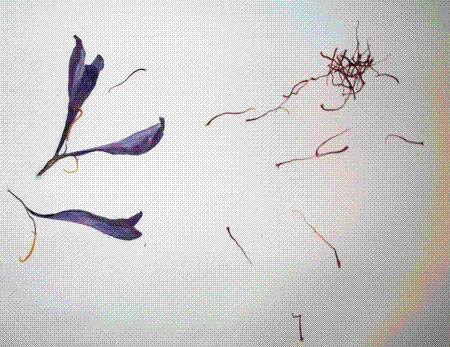
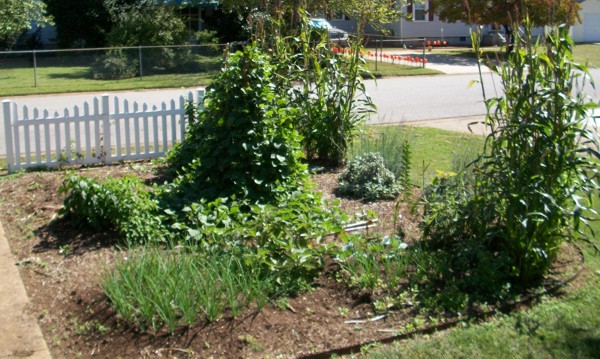
      I have my own saffron!!!   Saffron crocus is a fall blooming crocus that is hardy here (zones 10-6).  The saffron is the red threads you can see on the lower petal.  The leaves are almost like grass they are so thin. I planted them all over the yard in a variety of soils and exposures.  They are, of course, doing best in the richest soil with the most sunlight, but they are producing even in the worst clay.... slowly.  They are even doing well in a medium size pot.

      Here's the clip from  Odyssey Bulbs, recommended to me by Mike Gibson at the Huntsville Botanical Garden. 
Crocus sativus ~ The beautiful pale lilac-purple flowers of this long-cultivated species are prized for their toothsome stigmas and styles (although keep in mind that it takes the dried styles of more than 4,000 flowers to produce 1 ounce of seasoning). But it is equally valuable (although perhaps not in the literal sense) as an ornamental plant. A natural for the herb or kitchen garden, it requires rich, well-drained soil, periodic division, and deep planting to do its best. Mediterranean. Zone 5.
   Can't wait to try it in my mother's family recipes!  I already have more than I got in the bottle at Publix, and they are just starting to bloom.  Here's hoping they are as flavorful as they are pretty!  They smell wonderful as they are pulled ready for drying.

They are dainty, and those in the richest soil are blooming several times.  I'm going to leave some out this winter well mulched to see if they will survive.  I'll dig up the ones in the poorest soil before a really bad freeze and give them a better home next year. 

Tuesday, October 11, 2011

This Why We Do What We Do!

Link broken..check here for pdf of the article!

This article in the New York Times recently is a perfect example of what we love to help folks do, feed themselves fresh, healthy and frugal food!   It takes time and effort, but it is oh so worth it!
You can tell yourself anything is too difficult, or you can just do it. And you do not need to reconstruct your worldview or take issue with others.
You just need to be hungry.

Monday, October 3, 2011

Fall is for Food from the Yard!

          October  already!  Just a few more days til the traditional first frost date of October 15th. So what's in the garden and on the table?
This was all gathered Sunday, or canned, as the case may be.
      Bell peppers are racing to beat the frost.  Little HOT (very hot) peppers (hot lemon) that will make a great bug repellent spray when dried and steeped next year. Reliable Jalapenos are still coming, some for the salsa, some for the bug spray next year.  Tomatoes, of course, smaller and fewer than they have been, but still producing!  Horseradish is there somewhere, not sure it was real happy in the sun, but it did make root, so we'll grate and freeze or pickle for some spice this winter. 
       The sorghum cane made pretty seed heads that the birds attacked, but we rescued a few for some hot cereal when the weather is really cold.  The cane is still green and making suckers and still sweet when cut and chewed.  I have to watch the Farmer so he doesn't come home with a millstone to crush them into syrup. 
     The okra is still coming, again slowing down, but we always have some til frost.  The Red heirloom okra deserves a place in the edible landscape (see below).  It is a lovely plant, open and uniquely colored.  The fruit is plentiful and very good.  The Farmer loves it raw, eating it as soon as he picks it.  We're trying to do less fried okra, so he can have as much as he wants.  We don't use the ginger in the foreground for the okra, but it does wander into some stirfry occasionally, and the winter squash will be happy to share flavors.


     The sweet potatoes are the first we've dug, they went in a little late but they did well, we'll leave the rest for a while yet.  The jars are full of Candy Roaster squash, ready for the pantry.  There's a bowl of mixed butternut (picked Friday from the side of the house) and the leftover Candy Roaster from canning.  That will go in a pie tonight, a bit of extra honey to sweeten the butternut and it will be as good as pumpkin (which is just another winter squash).

Right front basil trying to seed then tomatoes
Left front butternut then sweet potatoes and a couple of
blueberries at the fence
      The pole beans are doing really well, as they usually do for us when planted after the spring/summer bush beans stop producing.  We've picked a few meals worth, but this bountiful harvest will have to be canned, we are only two people after all!   A note on the beans, I planted 8 seeds, one in each corner of two 4'x4' beds, seen below, the teepees.  After picking these, I think I'll vote for going back to growing them on hogwire fencing or we'll go with cattle panels.  The teepees may look cute, but most of the beans are below waist or knee level and I'm too old for very much stoop labor.  Maybe taller teepees, but we made these as high as I could reach.  Gardening is experimenting!

Lavendar and sage are some of my favorite herbs.
    The basil is still growing and I'm cheering on the 'lettuce leaf' plants we grew from last year's seed.  It did wonderfully this year, but is a bit slow making seed.  I hope it makes it before frost!! 
    In the garden and growing for next season is cabbage, onions, lettuce, carrots, beets, turnips.  Kale is waiting to go in the ground.  Cilantro is coming up everywhere from seeding itself early this summer.  Hope The Farmer didn't get it all when he 'weeded'.
Heirloom bunching onions from a friend in Lacey's Spring,
eggplant still hanging on, cabbage growing, peppers giving it
their all, sorghum cane that will not turn brown, sages, lavendar and
cilantro.

     That's where we are as October starts... how does your garden grow?

The Farmer's Wife

Sunday, October 2, 2011

That's a big squash ...

           The squash matches my walls?!   It is a Candy Roaster Squash, one of a variety of similiar winter squashes related to the Pink Banana Squash that call Southern Appalachia home.  Like the Cuccuzzi that we talked about here for summer, this squash is enough to feed a family with a single squash, but you may want to just make several pies and don't tell the kids its a veggie!  While this is a winter squash and you can keep it whole if properly cool and dry, I prefer to can it, since it is just the one (we bought ours from Jack-O-Lantern Farm at the Greene St. Market last week), and I'm not sure I want to give up the guest room for it.

        Now to putting it up... First, decide how many quarts you will need.... uh oh.  That's a gallon jar, I'm going to need several quarts.

          I'll cut the squash in half crossway, then longways to expose the seed.  Scrape the seed and roast in a 375 degree oven for 40 minutes or so til tender.  I'll mash and then pressure can in quart jars.  I'm going to save some out for a pie now that the weather is turning cooler.  Hmm.. I may end up freezing some too, might be too much for one canning session and not enough for a second. 

It's a really big squash!

Saturday, October 1, 2011

It's Fall When...

    You know it is fall when the menu calls for
Onions ~ fresh from the yard ~ sauteed til tender ~ remove from pan and brown
Pork Chops ~ fresh from the farmer (ok, frozen) ~ add
Apple Cider ~ from Isom's Orchard at Greene Street Farmer's Market ~ and simmer til tender and chops are done.
A side dish?
Butternut squash ~ from the yard, canned last fall and making room for this year's crop ~ with a bit of butter and pumpkin pie spices warmed so the scent can fill the house
A few rolls from the freezer ~ warmed in foil over the chops to save a bit of energy ~ always make extra!
And dessert?
Pears ~ a gift from CASA garden volunteer from their tree at home ~ simmered in water and honey from Glory Gardens

Now that's a friends and family meal!

Tuesday, March 22, 2011

Spring has Sprung

Spring has sprung with a vengeance it seems.  Really warm weather threatens to undo our plans for a last planting of quick greens.  The Toi Choi are only 28 days to mature, but they are bolting at 16 days. 
The collards that 'should' last longer are giving up and furiously setting seed.

 The Red Russian kale thinks it's been transplanted from Siberia to the Black Sea seashore and, while still nice looking, is also getting ready to reproduce.
Drat.  I blame global warming   climate disruption  climate change the weather :)
I hear the local weathermen are saying the frosts are over, so I'll prove them wrong and start putting out warm weather plants!  Early flat Italian green beans are a good first candidate.  I've planted them 'too early' before and they did ok.  I'm still going to hold off on the really warm weather tomatoes, eggplant and peppers.

All is not lost.  The collards and kale will be chopped up and blanched for canning or freezing to be enjoyed in a couple of months.  Easily drained, rechopped and added to fresh tomatoes, olive oil, garlic and seasoning then sauteed for tossing with pasta or rice.

GentleVoice

Sunday, January 23, 2011

Cucuzzi - Feed a Family with One Fruit!


       Here is a great plant for vertical gardening. This gourd does grow fast and long. I pruned ours to keep it within the bounds of its area and it did not mind at all. This gourd needs sun, we planted it at a defined shade line and it grew totally toward the sun side. With 20' of growth on one side and 1' on the shade side. Though it is a consistant producer, we were not overwhelmed with numbers. We had zero issues with insects or diseases. Squash and stink bugs stayed away although they were feeding nearby. We had a great harvest from 2 seeds. We covered the plant for several freezes and pulled the last gourds at Christmas.

      Potential sites includes arbors, fences, or perhaps trellising against a south wall to provide shade. Give this one room to run or train it to grow along the fence or arbor. Ours grew up and out of a tomato cage and along the ground and then climbed another cage 8' away. The bed width where we tried the plant is 4', to maintain access I pruned the plant 2x during the growing season. The cucuzzi took the hint and tried to stay inbounds and grew along the bed very nicely.

       Our favorite way to eat them is to cut them into 1/2" squares, stirfry in olive oil with a little salt and pepper. We think it tastes like a bite of meat. We often include it in dishes, but this one can stand alone on the plate. One gourd can make several meals.    

     Ours came from Lincoln, AL where they are simply called "Long Gourd" cucuzzi.  Also known as Hercules's Club and other imaginative names.

Lagenaria siceraria -- Vine growth is very vigorous. Leaves are large with a soft, velvety texture. Leaf margins are irregular but not lobed. Tendrils are long and forked. Vines have a musky scent. Flowers, which are perched on long, slender stems and have a sweet scent, bloom only at night and are pollinated by moths. Fruit size varies from medium small to very large. The mostly thin-shelled fruit can be dried to form a mostly empty shell. Seed size and color is too variable to delineate.  (from Commercial Production and Management of Pumpkins and Gourds Edited by William Terry Kelley, Extension Horticulturist  David B. Langston, Jr., Extension Plant Pathologist)

Monday, September 6, 2010

Time for a Coooool Chaaannge

Like the lyrics of the song, it is time for a coooool change, the mornings now hold the first hints of fall, relief is just a few weeks away. It is time to fill those empty spaces in the garden with veggies that like cool weather. If you preserve food you may want to plant the entire crop at one time to avoid repeated setups of the canning equipment.

Plant now, enjoy sooner!
However, to be in the spirit of 4 season gardening and eating, don't plant all your vegetables at one time. Consider succession planting. Plant just part of your expected fall produce needs now and then keep planting new seeds and transplants every two weeks. Plant at least as much as you think you'll eat, you can always freeze some for later.  Five separate plantings, two weeks apart over a 10 week period can extend your harvest over a 10 week period. This is the one big technique that sustainable farmers use to provide produce through such a large window of time.

Remember your rotation plan, don't plant in a helter skelter fashion, stay somewhat disciplined and try to group plants by family as well by moisture, and nutritional requirements. Of course, group plants by temperature range or frost and freeze tolerances as well. Four season food production is our goal and that is easier to do when you can protect whole rows or beds at one time instead of an isolated plant among hardy plants.

If you haven't already done so, start your Cabbages, Broccoli and perhaps Kale and Collards now. Direct seed Carrots and Beets. Remember Carrots really want consistent moisture for a week or more before they germinate. Try planting Radishes with your Mustards and other leafy crops this fall. The Radishes may help keep flea beetles and other pests away long enough for your plants to have a great start this fall. Start Black Seeded Simpson lettuce now, as the weather cools other varieties (including the wonderful Buttercrunch!) will follow.
The fall garden is my favorite gardening period. Weed pressures are much lower. Cooler drier air really brings the joy back into some of the chores. Don't forget to turn the compost pile, or go ahead and install some of that compost now on the beds where you will be planting fall and winter crops. Make plans to shred and keep those leaves this fall. If you don't have trees on your property you may have to resort to becoming a leaf thief. Leaves are a wonderful component for future composts, run over the leaves with your lawnmower and create a topical mulch for your onions and the beds you aren't using this fall and winter.  Avoid bare soil if at all possible. Uncovered, bare soil is the fastest way to lose soil to erosion, and you lose the opportunity to build soil or add microbial life to your garden. Next year's garden will thank you for the mulches you create this fall.

Lee McBride

Wednesday, April 14, 2010

Eating well?

We grow, catch, hunt most of our basic food around here, but our main goal is for everyone to be able to eat better, fresher food.  This is an article about eating well on food stamps.  Some excellent chefs attempted to create menus on an average food stamp allotment of  $68 per week.  They did pretty well, even if I do think they went a little heavy on the meat.  We are, of course, meat eaters but we do try to skip it at least once a week, even more in the summer when there are a lot of fresh veggies to make endless main dish salads.

My thoughts?  I wonder how much farther those dollars would stretch if families could supplement with home grown veggies?  I know, there's a lot of work involved, but perhaps at least those families that have someone home during the day, due perhaps to job loss, who could be growing for themselves ... and perhaps others?

Could you give the gift of a garden to someone who could use a few more healthy calories on the table?  Or who might turn those extra veggies into a little extra income?

GentleVoice

Friday, January 29, 2010

How much do you spend on food?

Or, how much of what you spend is spent on food?  More or less over the years?  Here's an interesting chart on the food expenditures by families and individuals as a share of disposable personal income from USDA.  The high is in 1933, when I think farmers were plowing under rather than sell at depressed prices, or couldn't get the crops out of the fields, or couldn't get credit to plant.  Shortages mean higher costs.

We are currently spending 9.5% of disposable income (not gross) on food.  And eating more it seems!  Definitely more calories per dollar. Looks like the more industrial agriculture/food manufacturers centralized and commodified food, the cheaper it got.  Ok, great, you say.  Hmmm.. how's your  health?  How is the health of your community?  Diabetes rates among the poor?  High blood pressure?  Can your kid take peanuts to school for a snack?  Allergies, eh?

Supporting local food, local community health and local farmers might mean using more of our dollars to purchase food, but we are buying much more than just lunch.  Not least might be the ability to purchase food at all, or to be secure about the sources of our food.

Saturday, December 26, 2009

Venison!

A dressed out deer awaits the freezer!   Thanks to the abundant acorn crop and all the rain this year, it was quite well fed, haven't seen that much fat in a while.  I'm strongly considering making some stew to can up.  We had a short power outage this morning that made me think about relying on the freezer quite so much for meat storage.  Some canned soup/stew and some vacuum sealed jerky sounds like a good idea....Any recipies to share?

GentleVoice

Sunday, December 13, 2009

Tis the season...to be busy!

A quick note to remember what was in the garden this day....
turnip greens, turnip (purple top), collards, cabbage (smooth) and savoy, buttercruch lettuce, chinese cabbage, onions (purple),  bunching bermuda (heritage), sage (! even the annual), rosemary, thyme, lavendar (! blooming?) oats and wheat hanging in there...ah, the garlic (elephant).
Not too bad :)   and very thankful for the bounty of the summer in jars and freezer. 
A quick peek at the website soon!!

GV

Monday, November 30, 2009

Versatile Recipies...Gotta Love 'em

We are blessed with lots of fish around the M.U.S.H.  So I'm always looking for new recipies for it.  Here's a good starter http://allrecipes.com/Recipe/Cheesy-Fish-Fillets-With-Spinach/Detail.aspx  Essentially three ingredients:  Fish, greens and cheese sauce.

I've fiddled with it endlessly and you can't go wrong.  I've used white bass, catfish, crappie and 'mystery' fish.  I've started with spinach, BABY turnip greens, small kale, baby collards, and mustard greens.  I've used the recipe's cheese sauce with cheddar (I rarely have swiss around), a light mozzarella/monterey jack sauce, and even Velveeta (both cheddar and jalepeno) thinned a bit with milk.

This is just one of those recipies that really works.  See what you can find around your house and give it a try!

GentleVoice

Friday, November 27, 2009

Recipe time!

Yep, now that it's too late for Thanksgiving, here's a quick and easy recipe featuring my favorite of the moment- Butternut squash
These keep really well and grow nearly unmolested by bugs and such. 
Ingredients for a simple sweet side dish:
Butternut squash - peeled and cubed into bite size pieces (seeds and skin bits to the compost).  Maple Syrup.

Bake the squash at 350 degrees until beginning to be tender.  Drizzle with syrup and continue baking about 10 minutes until tender.  Serve warm.

Simple enough?   And quick too!    Use a bar type peeler if you have it.  If the peeling is really frustrating... cut squash in half, remove seeds with spoon and place face down in baking pan.  Pour in a little water and bake at 300 degrees until tender.  Scoop out flesh and put the shell and seeds into the compost pile.  Put the squash in a pan and mash with the maple syrup.